Firearm & San Diego CCW Training | Focal Point Academy

Part of the Focal Point Academy Safety & Compliance Resource Center.
Becoming an armed security professional in California is not simply about learning to shoot.
It is about entering a regulated profession that carries legal responsibility, public trust, and personal accountability.
The licensing process is structured and governed by the California Bureau of Security and Investigative Services.
This guide explains, step by step:
If your goal is to enter the armed security profession correctly and professionally, this guide will clarify your path.
Clarity reduces mistakes. Mistakes delay careers.
This guide is written for:
If you want to do this properly the first time — not rush through it — you are in the right place.

Before pursuing armed status, you must understand the licensing distinction.
A Security Guard Registration allows you to work for a licensed Private Patrol Operator (PPO). This registration can later be upgraded with permits such as:
Official Guard Fact Sheet:
https://www.bsis.ca.gov/forms_pubs/guard_fact.pdf
A PSO:
Official PSO Fact Sheet:
https://www.bsis.ca.gov/forms_pubs/ppso_fact.pdf
If your goal is armed security employment, PSO registration is not the correct pathway.
Understanding this distinction early prevents wasted time and application errors.
Before carrying a firearm professionally, you must first obtain a Security Guard Registration.
Requirements:
Official Registration Information:
https://www.bsis.ca.gov/forms_pubs/guard_fact.shtml
Most applicants complete this step within weeks when paperwork is accurate.
Procedural discipline matters here.
Before submitting an initial Firearms Permit application, applicants must pass the BSIS Firearms Assessment.
Official Assessment Page:
https://www.bsis.ca.gov/firearmsassessment/
The assessment evaluates baseline firearm knowledge and safety understanding.
Although the assessment is required before application submission, disciplined candidates complete it early to avoid delays later in the process.
Preparation reduces friction.
The Firearms Assessment is administered by PSI testing services.
PSI Registration Portal:
https://test-takers.psiexams.com/dcabsis/test
Applicants must:
Completing this early creates forward momentum.
Momentum builds confidence.
Applicants must submit fingerprints using the correct BSIS Live Scan form.
For Guard + Firearm applicants:
https://www.bsis.ca.gov/forms_pubs/livescan/guard_firearm.pdf
Live Scan must be completed through a licensed vendor.
Using the incorrect form or ORI code can delay processing — small administrative errors can cost weeks.
Attention to detail is part of professional readiness.
After completing the Firearms Assessment, applicants complete the BSIS-approved 14-hour Firearms Training Course.
This course includes:
During the course, students must:
Official Firearms Permit Fact Sheet:
https://www.bsis.ca.gov/forms_pubs/fire_fact.pdf
This is not a casual training day.
It is preparation for carrying a firearm in a professional capacity.
BSIS allows qualification in specific calibers, including:
Each caliber requires separate qualification and documentation.
Permit holders may only carry calibers listed on their permit.
Official Firearms Manual:
https://www.bsis.ca.gov/forms_pubs/firearms_manual.pdf
Precision matters here.
Applicants must provide documentation proving lawful presence in the United States, such as:
Incomplete documentation will delay processing.
Administrative discipline is part of professional credibility.
Official Manual:
https://www.bsis.ca.gov/forms_pubs/firearms_manual.pdf
Initial qualification includes:
Qualification also evaluates:
Performance under structure is the goal — not speed or ego.
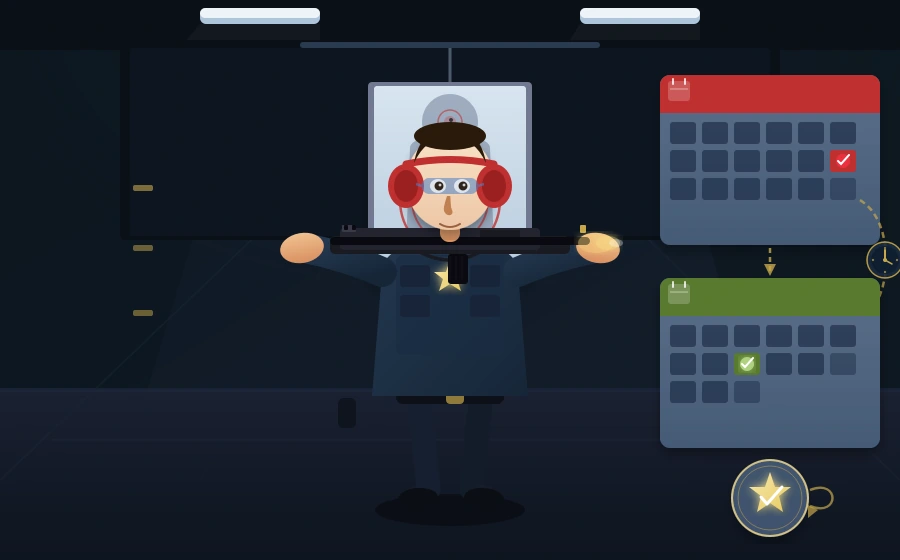
Armed guards must complete:
Best practice: Requalify every 4–6 months from your permit issuance date.
If you allow your permit to expire due to failure to complete required qualifications:
You cannot renew. You must reapply as a new initial applicant.
Official Renewal Information:
https://www.bsis.ca.gov/forms_pubs/fq_renewal.pdf
Professional responsibility includes tracking your own compliance.
Common reasons include:
The licensing system is procedural. Following it consistently prevents career interruption.
Consistency builds credibility.
Armed security is not a hobby.
It is a licensed profession involving:
Training should emphasize:
Focal Point Academy serves armed security candidates throughout:
Class sizes are intentionally limited to ensure oversight and documentation accuracy.
We are not a high-volume environment.
We are a compliance-driven training provider focused on preparing professionals — not hobbyists.
For a complete overview of all available compliance guides, visit our California Firearm & Security Training Resources center.
If you are ready to pursue armed security status in California, sequence and preparation matter.
If you are unsure about:
• Assessment timing
• Live Scan documentation
• Caliber qualification
• Requalification tracking
• Guard vs PSO pathway
Contact us before registering.
We will help you determine the correct next step.